
Key takeaways
- US ADR hit a weekly record of $179.30 in mid-September 2026, with RevPAR up 10.4% year over year.
- US hotel GOPPAR in 2025 was still about 10% below 2019, mostly because costs rose faster than revenue.
- Rate gains are uneven: luxury captures them, midscale and economy hotels largely do not.
- Revenue per guest, earned before arrival, during the stay and after checkout, is the lever most hotels still under-use.
What happened in mid-September
CoStar's data for 13 to 19 September 2026 showed growth almost everywhere, compared with the same week in 2025:
| Metric | Value | Change year over year |
|---|---|---|
| Occupancy | 71.1% | +4.4% |
| Average daily rate (ADR) | $179.30 | +5.7% |
| RevPAR | $127.43 | +10.4% |
Chicago led the top 25 markets, with ADR up 28.2% to $257.66. Washington, D.C. posted the biggest occupancy gain, up 10.7% to 82.3%.
Groups drove part of it. Luxury and upper-upscale group demand rose 7.1%, producing the largest group week of 2026 with more than 2.5 million room nights sold. Nearly nine out of ten US markets reported RevPAR growth that week.
Why record rates are not record profits
One strong week does not change the year. The week before, 6 to 12 September, RevPAR fell 6.2% because of a Labor Day calendar shift. For August as a whole, ADR rose only 1.5% and occupancy 0.5%.
The bigger issue is the cost base. US hotel GOPPAR in 2025 was still 10% below 2019 levels, driven largely by rising costs. And 2025 RevPAR actually declined 0.3% nationally, leaving the industry roughly flat for the year.
The gains are also uneven. Cloudbeds describes a "K-shaped" market: luxury hotels keep winning demand and rate, midscale is flat, and economy hotels face steady pressure. If you run a boutique or independent property below the luxury tier, the headline record is probably not your number.
That leaves two levers: cut costs, or grow revenue that does not depend on room rate. Industry advisers are already pointing at the second. A Hospitality Net analysis of 2026 cost controls recommends judging group business by total profitability including ancillary revenue, and shifting incentives from top-line growth to profit.
Where the next dollar comes from: revenue per guest
A room is sold once per night. Hotel services can be sold again and again across the same stay: breakfast, a bottle of wine, a massage, a late checkout, a transfer to the airport. That is hotel ancillary revenue, and for most independent hotels it is the least managed line on the P&L.
Revenue management has become very good at pricing the room. Very few hotels apply the same discipline to what the guest buys after the room is booked. Most of that spend is left to chance: a printed menu in a drawer, a spa flyer at the desk, a phone that may or may not be answered.
The opportunity is not a new department. It is making the services you already offer visible and easy to buy at the right moment.
Three moments to earn more per guest
Before arrival
The days between booking and check-in are the guest's planning window. A short message by WhatsApp, SMS or email with two or three relevant offers (a room upgrade, early check-in, a dinner reservation, a spa slot) reaches the guest when they are deciding how to spend their trip. Keep it short, specific to the property and timed close to arrival.
During the stay
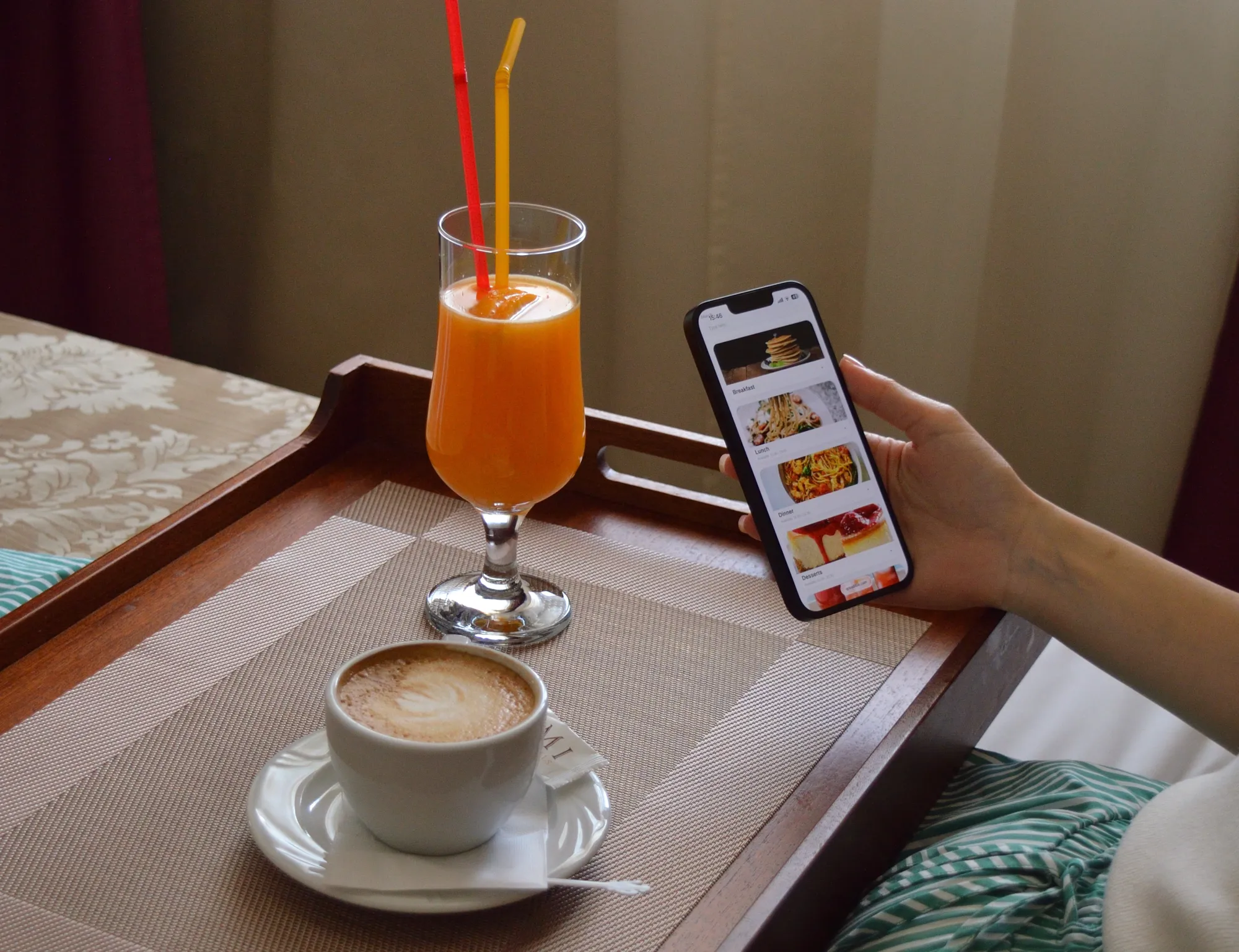
This is where most hotel services are actually consumed, and where friction costs the most. A guest who has to find the menu, call the desk and wait on hold will often give up. Put the full offer in the room, reachable by a QR code, with ordering on the same screen. Change the offer by time of day: breakfast in the morning, spa in the afternoon, drinks in the evening.
After checkout
Every order is data. Which services sold, to which kind of guest, at what hour? Use it to cut offers nobody buys, promote the ones that work, and shape what you send the next guest before arrival.
Q4 2026: long weekends are an upsell window
The Q4 calendar works in hotels' favour this year. Several holidays fall on Fridays and Halloween falls on a Saturday, which should support leisure demand. Booking windows are expected to stay short, though.
Short lead times shrink the pre-arrival window, which makes the in-stay moment even more important. Practical ideas for the long weekends:
- A Sunday late-checkout offer, sent on Saturday evening to guests in the room.
- A holiday-weekend brunch, promoted in-room on Friday night.
- Spa or wellness slots released on the morning of each day, so guests book when they see availability.
- A Halloween evening drinks or kids' activity package for families staying Saturday night.
How Qreadible fits
Qreadible is built around one idea: the guests already in your hotel are the most valuable ones. The platform covers all three moments above. PreQre handles pre-arrival offers by WhatsApp, SMS and email. The in-stay module puts F&B, spa, experiences and service requests behind a QR code in every room, with orders routed straight to the team that fulfils them. Post-stay analytics show what guests bought and when.
At The Gotham Hotel in Manhattan, 89% of guests used the platform during their stay. An offer only earns revenue when guests actually see it.
The bottom line
A record ADR is good news, but it will not close the profit gap on its own. The hotels that come out of Q4 ahead will be the ones that earn more from each guest, not only from each room. Start with what you already offer, and make it easy to buy before arrival, during the stay and after checkout.
Want to see how much your guests would spend if they could find it? Book a 20-minute walkthrough of Qreadible with our team.