
Key takeaways
- A quarter of US summer travelers in a 2026 Deloitte survey used generative AI to research their trip.
- In Skift research, 39% of travelers reported getting outdated or incorrect information from AI travel tools.
- Hilton and Hyatt both expect guests to book through AI assistants and want to be visible there.
- Accurate public information is the entry ticket. Owning the in-stay experience is how a hotel keeps the guest.
How AI is changing hotel discovery in 2026
AI-assisted trip planning is no longer an experiment. Deloitte's 2026 Summer Travel Survey found that 25% of summer travelers in its sample used generative AI for travel research. An Accenture survey of more than 5,000 leisure travelers in June 2026 found that 40% would fully hand comparison of travel options to an AI agent, though only 10% would let it handle payment (HotelSpeak).
The big brands are preparing for it. At Skift Global Forum in New York in September 2026, Hilton CEO Chris Nassetta and Hyatt CEO Mark Hoplamazian both said they expect guests to book through AI assistants, and that they want their brands well represented when that happens. A few days later, at the Destination AI Summit, an Amazon Web Services hospitality leader warned that hotel companies that wait risk letting new intermediaries define the next generation of hotel distribution.
Nobody knows yet how the booking itself will settle. McKinsey has sketched four possible futures, ranging from AI as a helpful copilot to a revival of direct booking to AI agents taking over the transaction entirely.
The accuracy problem
Being named in an AI answer is not the same as being described correctly. In Skift research, 39% of travelers said AI travel tools had given them outdated or incorrect information, and 46% said the suggestions felt generic.
For an independent hotel, the typical errors are mundane and costly:
- A restaurant that closed or changed its hours is still listed.
- A spa treatment, pool or shuttle that ended last season is still promoted.
- The property is described in generic "boutique hotel" terms, so the reason to choose it disappears.
- Room types, family configurations or accessibility features are missing.
Each one either sends the wrong guest or loses the right one. And because brand hotels have teams maintaining this content, independents are the ones most likely to be described badly.
A five-step accuracy checklist for independent hotels
You cannot control how an AI model works. You can control the information it learns from. This checklist adapts recommendations from recent consulting research on AI and hotel discovery into steps a small team can run.
1. Write a dated fact sheet
One document listing what is true today: location, room types and configurations, amenities, restaurant and spa hours, policies, accessibility, and what makes the property different. Date it. This becomes the reference for everything else.
2. Make every public source match it
Your website, Google Business Profile, OTA listings and social profiles should all say the same thing. Consulting firm BCG recommends broad, detailed content that machines can read, supported across multiple sources. One outdated listing can outweigh a correct website.
3. Ask the AI yourself, every month
Test two kinds of questions in the assistants your guests use. Questions that name your hotel ("Does [hotel] have a spa?") and questions about a need without naming you ("quiet boutique hotel in the Hudson Valley with a good restaurant"). Record the date, the tool, the question and the answer.
4. Correct at the source
When an answer is wrong, find where the wrong fact still lives online and fix it there. Then check again the following month.
5. Give it an owner
Accuracy fails when it belongs to nobody. Operations confirms what guests actually receive; marketing keeps the description current. A short monthly review is enough for most independent properties.
Why the stay is where you win the guest back
Accuracy gets you onto the shortlist. It does not give you the guest.
If an AI assistant or an online travel agency handles discovery and booking, the guest's first real contact with your hotel may be the arrival itself. The intermediary holds the search, the comparison and the payment. What it cannot hold is the stay.
The stay is the one stage of the journey the hotel fully owns. It is where the guest orders breakfast, books the spa, asks for a recommendation and decides whether to come back. It is also where the hotel can learn what this guest actually values, without paying anyone a commission for the insight.
There is a second reason the stay matters. AI agents draw on contextual material such as reviews and travel writing, not only structured listings (Skift). What guests experience becomes what guests write, and what guests write becomes part of how AI describes you. The in-stay experience is now, quite literally, part of your distribution strategy.
How Qreadible helps hotels own the stay
Qreadible is the in-stay layer for hotels that want to grow revenue and loyalty from the guests already in the room.
- Before arrival. PreQre reaches booked guests by WhatsApp, SMS or email with upgrades and add-ons, so the hotel's own conversation starts before check-in.
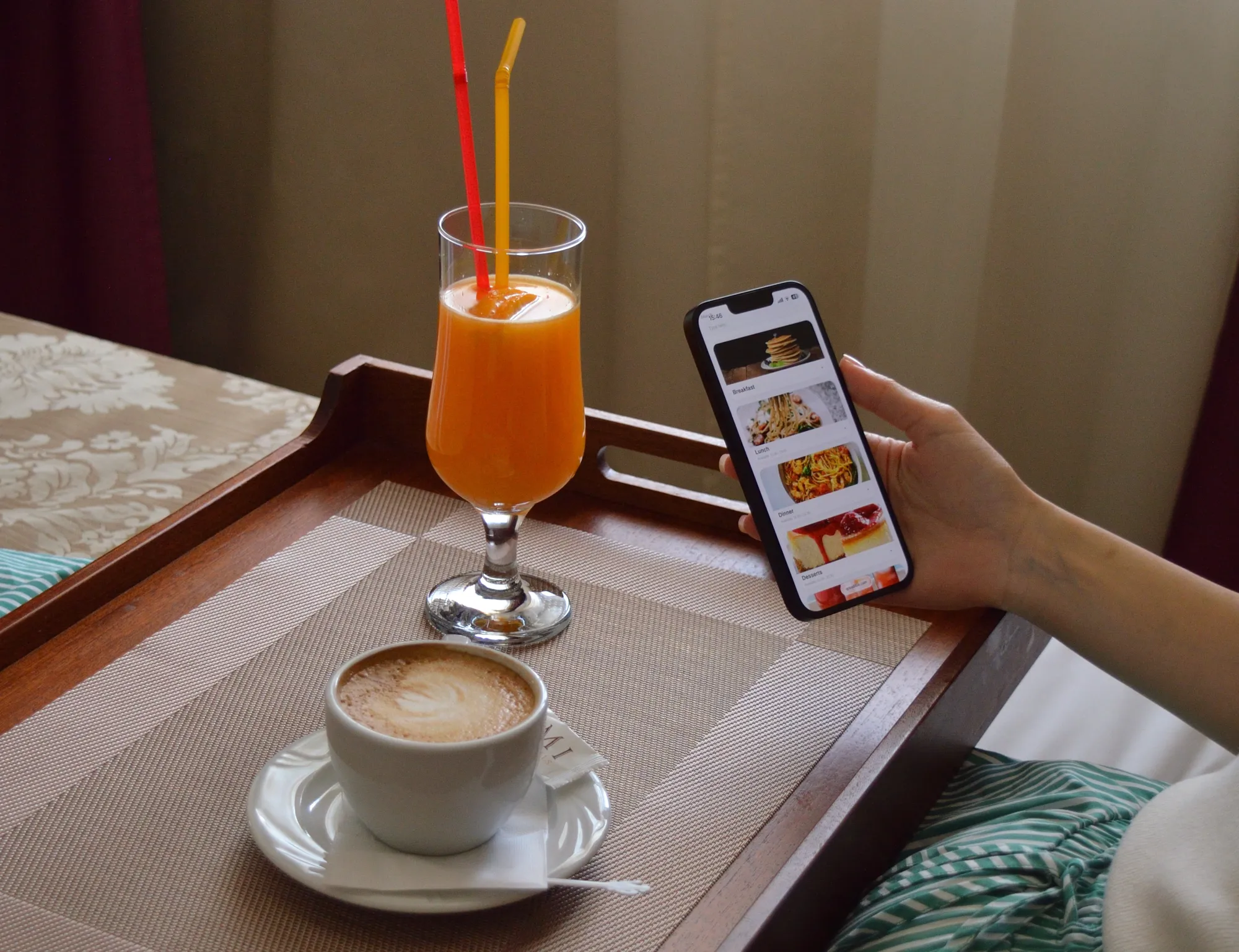
- During the stay. A QR code in every room opens the hotel's services: F&B, spa, experiences and requests, kept current in one place and routed to the team that fulfils them.
- After checkout. Post-stay analytics show what guests used and bought, so the next offer is better than the last.
At The Gotham Hotel in Manhattan, 89% of guests used the platform during their stay. Whoever handled the booking, the stay belonged to the hotel.
The bottom line
AI will change how guests find and book hotels. It will not change who hosts them. Keep your public information accurate so AI recommends you for the right reasons, and invest in the part of the journey nobody can take from you: the stay itself.
Want to see what owning the stay looks like in practice? Book a 20-minute walkthrough of Qreadible with our team.