
Key takeaways
- Roughly 25% of calls to hotels go unanswered, out of about 4,000 calls a year at a typical Wyndham property.
- Hilton's messaging bots now handle 40% to 45% of incoming guest messages, freeing staff for problems that need a person.
- Hotel CEOs agree on one thing: technology should make staff better at their jobs, not replace hospitality.
- Independent hotels get the biggest gain by moving routine requests off the phone entirely, onto a channel guests use from the room.
What the big brands revealed at Skift Global Forum 2026
Five hotel CEOs shared the stage at Skift Global Forum in New York in late September 2026: Hilton, Hyatt, Accor, Wyndham and Banyan Group. They agreed that AI should make hotel employees better. They disagreed on how many jobs it will change.
Wyndham brought the clearest result. A voice tool built on Salesforce now answers every call at participating hotels. Only 15% of callers ask to speak to a human, and a higher share of calls converts into bookings.
Hilton is moving in the same direction through messaging. Hilton's CIO, Michael Leidinger, said its bots handle roughly 40% to 45% of incoming messages across its properties, so employees can focus on issues that need human judgment.
Hilton CEO Chris Nassetta was firm that the front desk stays, even at limited-service brands. In his words: "You're never taking all the people out." Accor CEO Sébastien Bazin took the opposite view, saying a third of the workforce across Accor's network will be displaced, and that he is already discussing retraining with unions (Skift).
| Company | What they shared | The number |
|---|---|---|
| Wyndham | Salesforce-built voice agent answers every call at participating hotels | ~25% of hotel calls normally go unanswered; 15% of callers ask for a human |
| Hilton | Messaging bots handle routine guest questions | 40% to 45% of incoming messages handled automatically |
| Hilton | Front desk stays, even at limited-service brands | Only a modest reduction over time |
| Accor | Expects large workforce displacement, planning retraining | One third of network workforce |
The industry was already pointing this way. In a survey run by Canary Technologies earlier in 2026, 58% of hoteliers named guest communications as the area where AI would have the highest business impact this year.
The math of a missed call
A missed call is easy to ignore because it leaves no trace on the P&L. Nobody books a line item called "breakfast the guest gave up on ordering." But you can estimate it.
Start with three numbers from your own property:
- Unanswered calls per year.
- The share of those calls that were a purchase in the making (room service, spa, a late checkout, a restaurant table, a transfer).
- Your average order value for those requests.
Here is an illustrative example using the Wyndham benchmark. The second and third numbers are assumptions for the example, not industry data:
| Input | Example value |
|---|---|
| Calls per year | 4,000 |
| Unanswered (25%) | 1,000 |
| Share with purchase intent (assumed) | 20% |
| Average order value (assumed) | $30 |
| Revenue lost per year | $6,000 |
That is one property, before counting the guest who leaves a review mentioning that nobody picked up. Swap in your own numbers. The real figure is often hidden at the busiest hours: in-stay requests tend to arrive exactly when the desk is handling check-in, check-out or a late-evening queue.
Why independent hotels should not copy the brand playbook
Wyndham built its voice agent on Salesforce. Hilton talks about AI with Amazon Web Services on conference stages. Banyan Group is building its own in-house AI team. An independent hotel with two people on the desk at night is not playing the same game, and it does not need to.
A voice agent answers the phone faster. It does not ask why the guest had to call. Most in-stay calls are not conversations; they are lookups and transactions:
- "What time does the restaurant close?"
- "Can I see the room service menu?"
- "Can someone bring extra towels?"
- "Is the spa open tomorrow morning?"
Each of these is faster for the guest, and cheaper for the hotel, when the answer and the order button are already in the guest's hand. The goal is fewer calls, not faster pickups.
How to stop losing in-stay requests: a four-step approach
1. Audit one week of calls
Ask the desk to tally every inbound call for seven days in four buckets: information questions, orders, service requests and real problems. Count missed calls separately. One week is enough to see the pattern.
2. Move information questions to a digital guest directory
Opening hours, menus, spa treatments, Wi-Fi, parking, local tips. Put all of it in one place the guest reaches by scanning a QR code in the room. If the answer changes, change it once and every room has it.
3. Move orders and service requests to the same channel
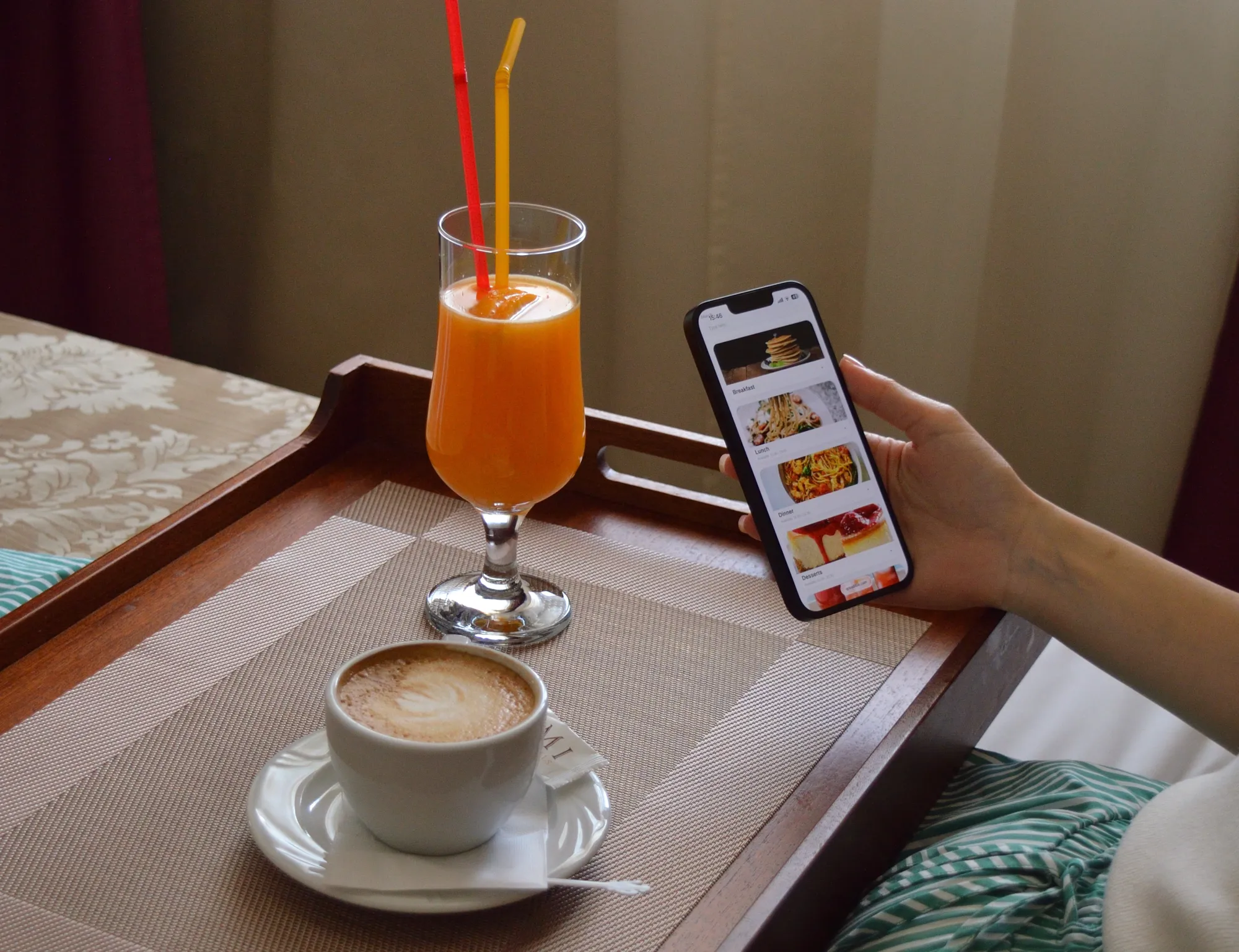
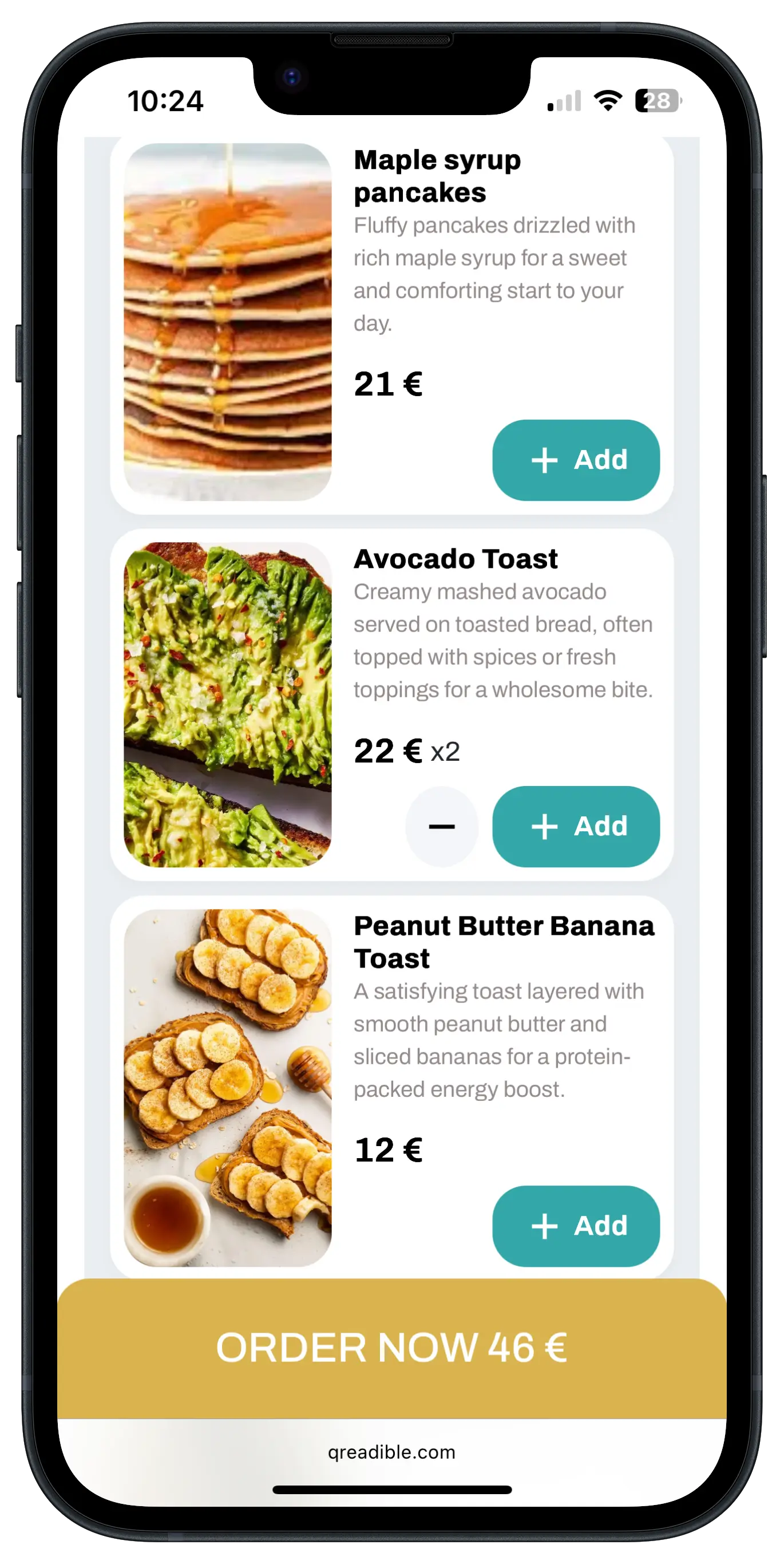
The guest who just read the breakfast menu should be able to order it on the same screen. Requests should land with the right team (kitchen, housekeeping, spa, front desk) instead of queuing behind the phone.
4. Keep people for what needs people
The desk's time is now free for the complaint, the special occasion, the guest who wants a recommendation. That is the point all five CEOs at Skift Global Forum agreed on: technology should make staff better at hospitality, not replace it. Track two numbers each month: share of stays using the digital channel, and average time to fulfil a request.
How Qreadible handles in-stay requests
Qreadible is built for exactly this layer. Guests scan a QR code in the room and see the hotel's services: F&B, spa, experiences, housekeeping requests. Orders and requests go straight to the team that fulfils them.
The same platform covers the rest of the stay. PreQre reaches guests before arrival by WhatsApp, SMS or email with upgrades and add-ons, and post-stay analytics show what guests actually ordered and when.
At The Gotham Hotel in Manhattan, 89% of guests used Qreadible during their stay. When the channel is easier than the phone, guests choose it.
The bottom line
The brands are spending millions to answer the phone faster. Independent hotels can win the same ground for far less by giving guests a reason not to call. Audit a week of calls, move the routine requests to the room, and let your team spend its time on hospitality.
Want to see how many requests your hotel is missing? Book a 20-minute walkthrough of Qreadible with our team.