
The phone was never built for this volume
A mid-sized independent hotel fields requests for room service, towels, spa bookings, restaurant reservations, maintenance issues and general questions, often all through the same front desk phone line. Each call takes a staff member away from the guest standing in front of them, requires them to write the request down correctly, and relies on that note reaching the right department before it is forgotten in the middle of a shift.
None of this is a training problem. It is a routing problem. A phone call has exactly one destination: whoever picks it up. A request for a spa treatment routed through the front desk still has to be manually relayed to the spa team, introducing delay and a chance for details, like an allergy or a specific time preference, to be lost between the guest and the person actually fulfilling the request.
What this actually costs a hotel
Hotel Sunce measured the impact directly after digitizing guest requests across reception, F&B and spa: staff saved an average of 15 minutes per shift, per staff member, and F&B service speed improved by 15%, once requests stopped moving through a phone-and-note relay and started reaching the right department directly. See the full Hotel Sunce case study for the complete breakdown.
At scale, 15 minutes per shift per staff member is not a rounding error. Across a property with a dozen staff working reception, F&B and spa, that is hours of labor freed up every single day, without changing headcount or schedules.
Guests prefer it too, for a different reason
The staff-side savings are the easier case to make, but guest behavior backs it up independently. International travelers, especially younger and more tech-comfortable guests, frequently prefer not to make a phone call at all, whether because of a language barrier, a time zone difference, or simply a habit of doing everything else from their phone already. A guest who is uncomfortable calling the front desk about a minor issue will often just not call, and the hotel loses the chance to fix it before it becomes a negative review.
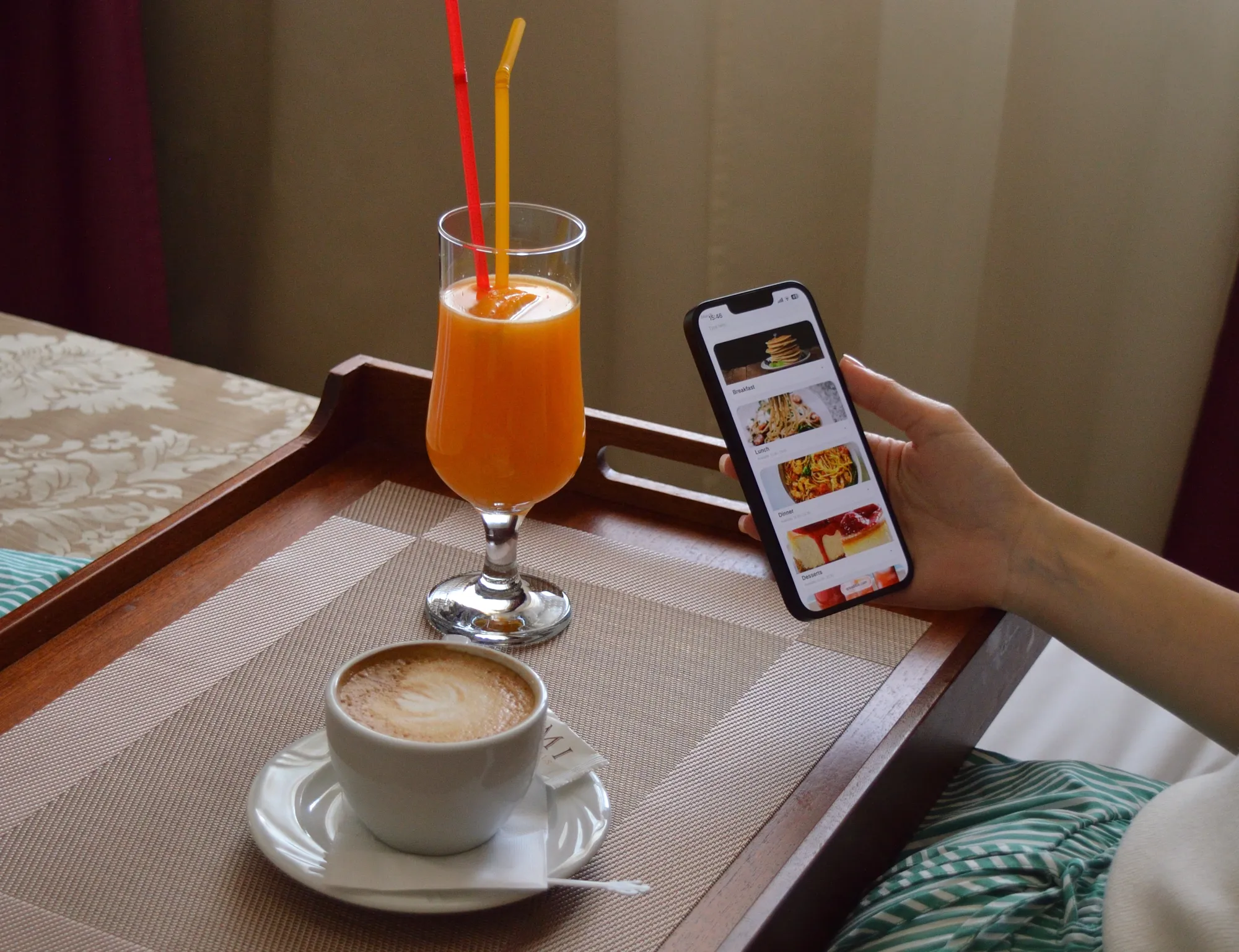
Digital ordering removes that friction entirely. A guest can order room service, book a spa slot, or flag a maintenance issue in the same interface they use for anything else on their phone, with no app download and no language barrier, since the interface can be presented in the guest's own language.
Routing is the actual feature, not the interface
The value is not simply moving a phone call into an app. It is that every request is routed directly to the staff responsible for it, instead of passing through a single front desk bottleneck:
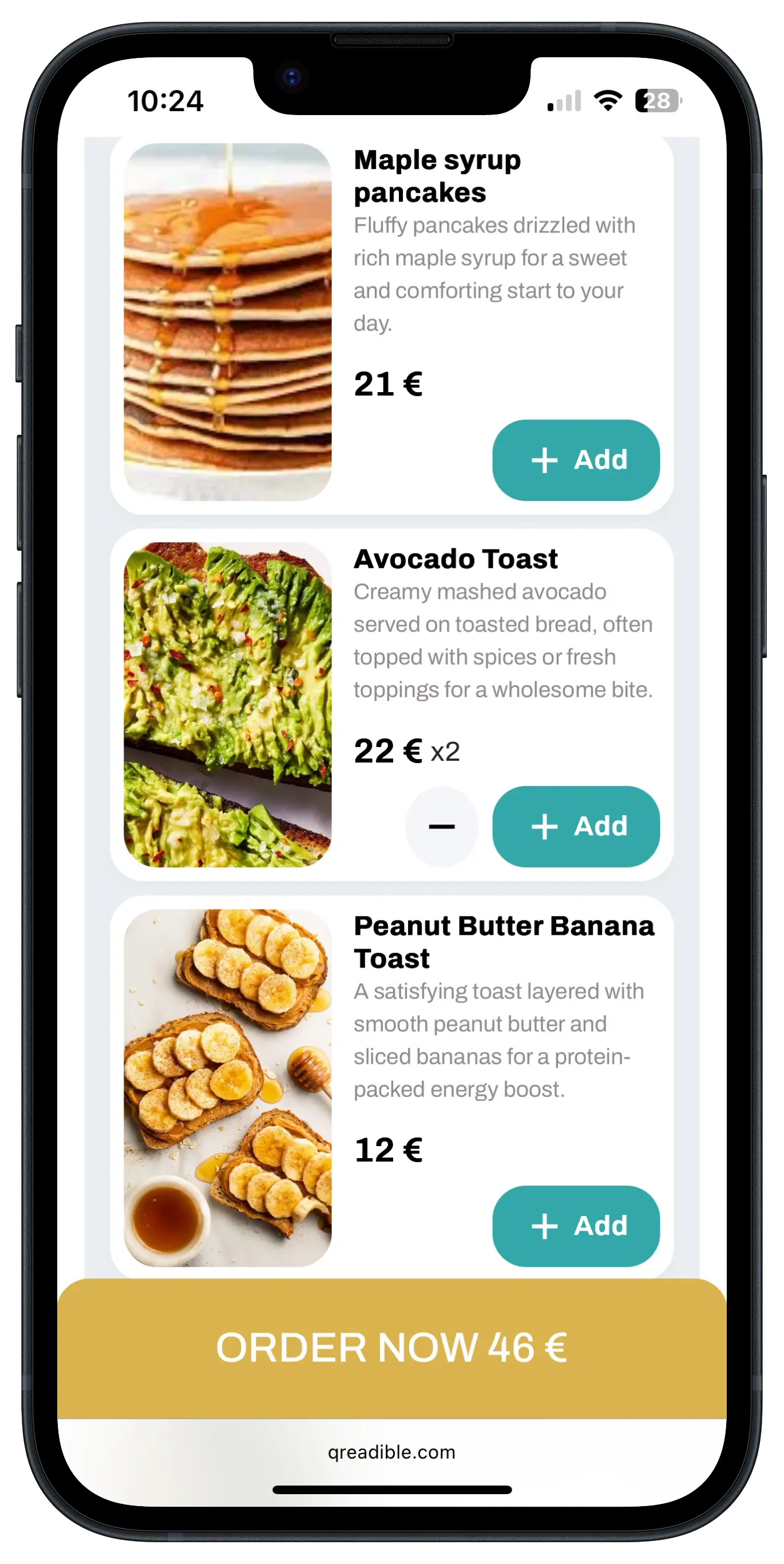
- A room service order goes straight to the kitchen, with the room number and any notes already attached.
- A spa booking request goes to the spa team, showing only the slots when a room, therapist and time actually align.
- A maintenance issue goes to housekeeping or engineering immediately, timestamped, instead of waiting for a front desk agent to relay it during a lull.
This is the core of Qreadible's guest ordering and requests product and its in-house operations layer: decentralized routing so every sector, front desk, F&B, spa, housekeeping, gets exactly the requests relevant to them, with full context attached, instead of everything funneling through reception first.
What changes for the front desk team specifically
Front desk staff do not disappear from the guest experience, their role simply shifts from relay operator to actual host. Instead of spending a shift fielding calls for other departments and writing down orders by hand, they handle the requests that genuinely need a human at the desk, check-ins, questions with no clear category, and the moments where a personal touch actually matters. That is a better use of a front desk team's time, and it is usually the argument that convinces skeptical staff faster than any revenue number does.