
The staffing math doesn't work anymore
Every general manager runs the same calculation eventually: labor costs keep climbing, occupancy is unpredictable, and the easiest lever, adding a sales-focused concierge or a dedicated upsell agent, adds fixed cost to a business built on variable demand. For a 40 to 120 room independent property, that hire rarely pencils out.
Meanwhile, the revenue is already there. A guest booking a standard room is frequently willing to pay for a sea-view upgrade if it is offered at the right second. A couple with a 7pm dinner reservation will often add a spa treatment that afternoon if someone simply asks. None of this requires new staff. It requires the offer to reach the guest at the moment they are already thinking about their stay, instead of relying on a front desk agent to remember to mention it during a busy check-in.
Where ancillary revenue actually comes from
Across independent and boutique properties, the same categories consistently outperform when they are made visible and easy to book:
- Spa and wellness: treatments, packages and monthly promotions that guests will book same-day if they can see live availability.
- F&B: restaurant reservations, room service, and pool or bar orders placed directly from a guest's own device.
- Room upgrades: view, floor and suite upgrades offered before or during the stay, not just at check-in.
- Late checkout and early check-in: small, high-margin conveniences guests will pay for if asked.
- Experiences and transfers: excursions, airport transfers and local partnerships that a hotel can broker without operating them directly.
None of these require new inventory. They require the hotel to surface what it already has, at the moment a guest is deciding how to spend their time.
Why most upsell attempts fail
Most hotels already try to upsell. Most of it does not work, for three predictable reasons:
- Generic timing. A promotional email sent three days before arrival competes with a full inbox. A banner shown the moment a guest opens the door to their room competes with almost nothing.
- Staff bandwidth. Front desk and F&B staff are already handling requests, complaints and check-ins. Remembering to pitch the spa package to every guest is not a realistic ask during a busy shift.
- It feels like advertising, not hospitality. Guests at independent and boutique properties expect a personal, curated experience. A pop-up discount code feels like the opposite of that, and it trains guests to associate the hotel's brand with a generic sales tactic rather than genuine service.
The fix is not more promotion. It is better placement: offers that show up inside the same interface a guest is already using to order food or request something from housekeeping, styled and worded as the hotel's own voice rather than a vendor's.
The three windows when guests are ready to spend
In practice, ancillary revenue concentrates in three narrow windows, and each one benefits from a different approach:
- Pre-arrival. Between booking and check-in, guests are still deciding what kind of stay they want. A well-timed message about a spa package or a dinner reservation converts far better here than a generic marketing email, because it is specific to their actual stay dates.
- In-stay, at the moment of a request. The highest-converting moment is not a scheduled promotion, it is the instant a guest is already ordering something. A guest requesting room service is a guest who is receptive to a wine pairing suggestion. A guest booking a spa slot is receptive to a package upgrade.
- Post-service. Once a guest has had one good experience, whether a great meal or a great massage, they are more likely to book a second one, or refer it to someone else in their party, if the option is presented immediately afterward.
What this looks like in practice
Hotel Sunce introduced digital ordering across reception, F&B and spa and saw service speed improve by 15%, alongside a new revenue stream from upselling spa promotions and personalized offers, all without adding headcount. The mechanism was not a new sales team. It was making the existing spa and F&B offering visible and bookable from a guest's own phone, with promotions surfaced at the moment guests were already interacting with the platform.
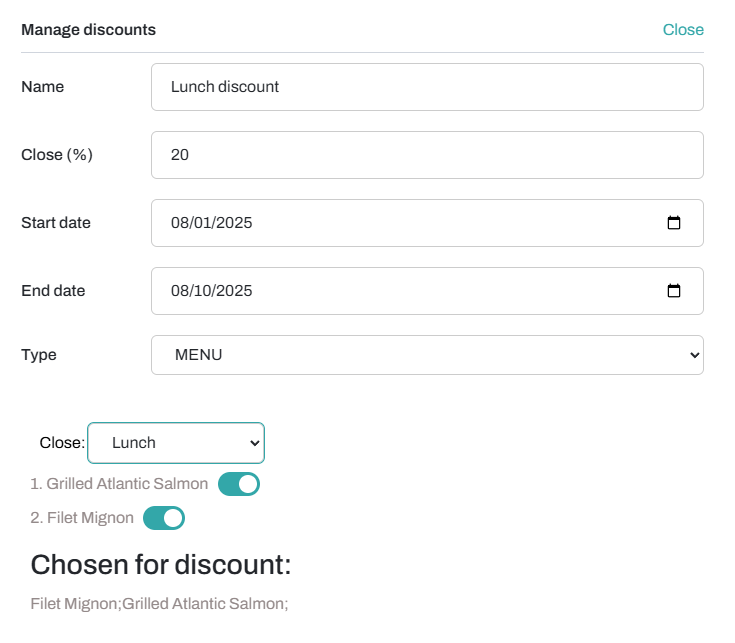
This is the model behind Qreadible's Promotions & Discounts and guest ordering tools: branded banners and time-sensitive offers that appear inside the same interface guests use to order food, book the spa or request something from their room, configured to match the hotel's own brand rather than a third-party marketplace.
Getting started without disrupting operations
The properties that see the fastest results tend to start narrow rather than broad: one or two high-margin categories (spa is the most common starting point), a small number of promotions live at any given time, and a short trial window to see which offers guests actually respond to before scaling further. Because none of this depends on new hires or a new department, it is one of the few revenue levers an independent hotel can pull in a single budget cycle.