Key takeaways
- Wellness tourism is worth USD 893.9 billion and is projected to grow about 9.1% a year. Thermal and mineral springs are projected to grow even faster, at about 10% a year.
- The most popular spa concept right now is the contemporary bathhouse: shared bathing rituals that bring guests back more than once per stay.
- Labor is the main cost pressure in resort spas. Services that do not need a therapist (infrared sauna, salt rooms, hydrotherapy) add revenue without adding the most expensive hour in the building.
- Demand is not the problem. In the CBRE sample, resort spa revenue grew 1.4% in 2024 while resort spa profit fell 0.7%.
- The gap is usually between the guest and the booking: the offer reaches the guest too early, too late, or not at all.
The numbers behind the wellness boom
The best single source on wellness demand is the Global Wellness Institute's annual Global Wellness Economy Monitor. The 2025 edition, with data to the end of 2024, shows a market that has fully recovered from the pandemic and is still growing.
| Indicator (GWI, 2024 data) | Value |
|---|---|
| Global wellness economy | USD 6.8 trillion, up 7.9% on 2023 |
| Wellness tourism | USD 893.9 billion, 110% of its 2019 level |
| Spas | USD 157.4 billion, 135% of their 2019 level |
| Projected wellness tourism growth | About 9.1% a year |
| Projected thermal and mineral springs growth | About 10.0% a year |
| Europe's share of the wellness economy | USD 1.7 trillion |
Two details matter for resorts. First, spas have recovered further than wellness tourism as a whole (135% versus 110% of 2019). People are spending on wellness even when they are not traveling specifically for it, which means your regular leisure guest is a wellness customer. Second, thermal and mineral springs are among the fastest-growing segments, which is good news for spa towns and mountain resorts built around water.
The US picture is similar. The International Spa Association's 2026 US Spa Industry Study, conducted by PwC, puts 2025 US spa revenue at a record USD 23.5 billion, with 191 million visits and average revenue of USD 123.10 per visit.
Note: GWI is expected to release its 2026 Global Wellness Economy Monitor at the Global Wellness Summit in Phuket (10 to 13 November 2026). The figures above are the latest published at the time of writing.
Trend 1: Thermal bathing and the modern bathhouse
CBRE Hotels Research describes contemporary bathhouses as the most popular trend in spa and wellness today: old bathing traditions combined with modern spa services, often in a shared setting. GWI's projection of about 10% annual growth for thermal and mineral springs points the same way.
For a resort, the commercial value of a bathhouse is not only the entry fee. It is frequency. A massage is usually a once-per-stay purchase. A thermal circuit, a sauna ritual or an evening bathing session can be used every day, and it creates a natural moment to sell the next thing: a treatment, a drink, a light dinner.
What to act on: if you have thermal water, a sauna area or a pool that closes at 19:00, treat it as a product with time slots, not a facility with opening hours. Sell evening sessions, rituals and small-group bookings.
Trend 2: Treatments that do not need a therapist
The single biggest cost in a spa is the therapist's hour. In CBRE's 2024 sample of 297 US hotels with spas, spa labor costs rose 3.9%, faster than spa revenue. CBRE notes that spas are adding services that do not need a therapist, such as LED light therapy, salt rooms, infrared saunas, cryotherapy, percussive therapy and enhanced hydrotherapy, to add revenue with minimal extra cost.
This matters most in mountain and seasonal resorts, where hiring and keeping therapists is hardest. A resort with six therapists has a hard ceiling on massage revenue. It does not have the same ceiling on infrared sauna sessions.
What to act on: list every wellness experience you could sell without a therapist present. Price them as short, repeatable sessions and make them bookable by the guest directly.
Trend 3: Calm over performance
The Global Wellness Summit's 2026 trends report names an "over-optimization backlash", a pushing back against tracking everything and chasing peak performance, and the rise of "neurowellness", treatments and practices aimed at calming the nervous system.
For resorts this is a positioning trend more than a product trend. Guests on a mountain or spa break are often trying to switch off. Programs built around sleep, quiet, nature and breathing fit that mood better than programs built around metrics.
What to act on: review your spa and activity menu from the point of view of a tired guest. Make it easy to find the slow, restorative options, and give them names that describe the feeling, not the technique.
Trend 4: Wellness as a social occasion
The GWS 2026 report also highlights the "festivalization of wellness": wellness becoming something people do together and as an event, not only alone in a treatment room. The bathhouse trend above is part of the same shift.
This is good for resorts with families, couples and groups. A couples' ritual, a sauna evening with a host, a guided morning walk or a sound bath for a wedding party all sell more than one ticket at once.
What to act on: add two or three shared wellness formats to the weekly program and sell them like events, with a time, a capacity and a short booking window.
Trend 5: Longevity, handled carefully
Longevity is one of the largest themes in the wellness industry, and GWS expects it to widen beyond its traditional male audience, with a separate trend on women's longevity. Some resorts will build full longevity programs with medical partners. Most will not, and should not overpromise.
What to act on: if you offer longevity-style programs, be precise about what they are and avoid medical claims you cannot support. For most resorts, a well-designed sleep, movement and nutrition package is more honest and easier to sell.
Why demand alone does not fill a resort spa
Here is the uncomfortable part. Demand is strong, yet CBRE's same-store sample shows US hotel spa revenue grew only 1.4% in 2024 while spa department profit fell 0.5%. At hotels in resort areas, spa profit fell 0.7%. Spa is also still a small share of the business: on average 3.5% of total revenue at resort-area properties in the sample, or about USD 6,539 per available room per year.
The reason is rarely that guests do not want treatments. It is usually one of these:
- The offer arrives at the wrong time. Spa offers in the booking confirmation reach the guest weeks before they know whether they will have a free afternoon.
- The guest does not see it at all. A spa menu in a folder in the drawer, or a link buried in a pre-arrival email, is invisible during the stay.
- Booking is hard. If the only way to book is to call reception or walk to the spa, many guests will not bother.
- Nobody owns the number. Few resorts track what share of in-house guests use the spa, so nobody notices when it falls.
Horwath HTL estimates that spa capture rates at beach resorts typically sit between 20% and 35% of in-house guests. That means two thirds or more of guests at a well-run resort leave without using the spa. Some of them never wanted to. Many simply never had the right offer at the right moment. We cover the spa side of this in detail in Spa Treatment Room Utilization: How Resorts Fill Empty Spa Hours.
The demand is there. See how in-house guests book it from their own phone.
How to turn wellness demand into in-stay revenue
The trends above tell you what to sell. These steps make sure it actually gets sold.
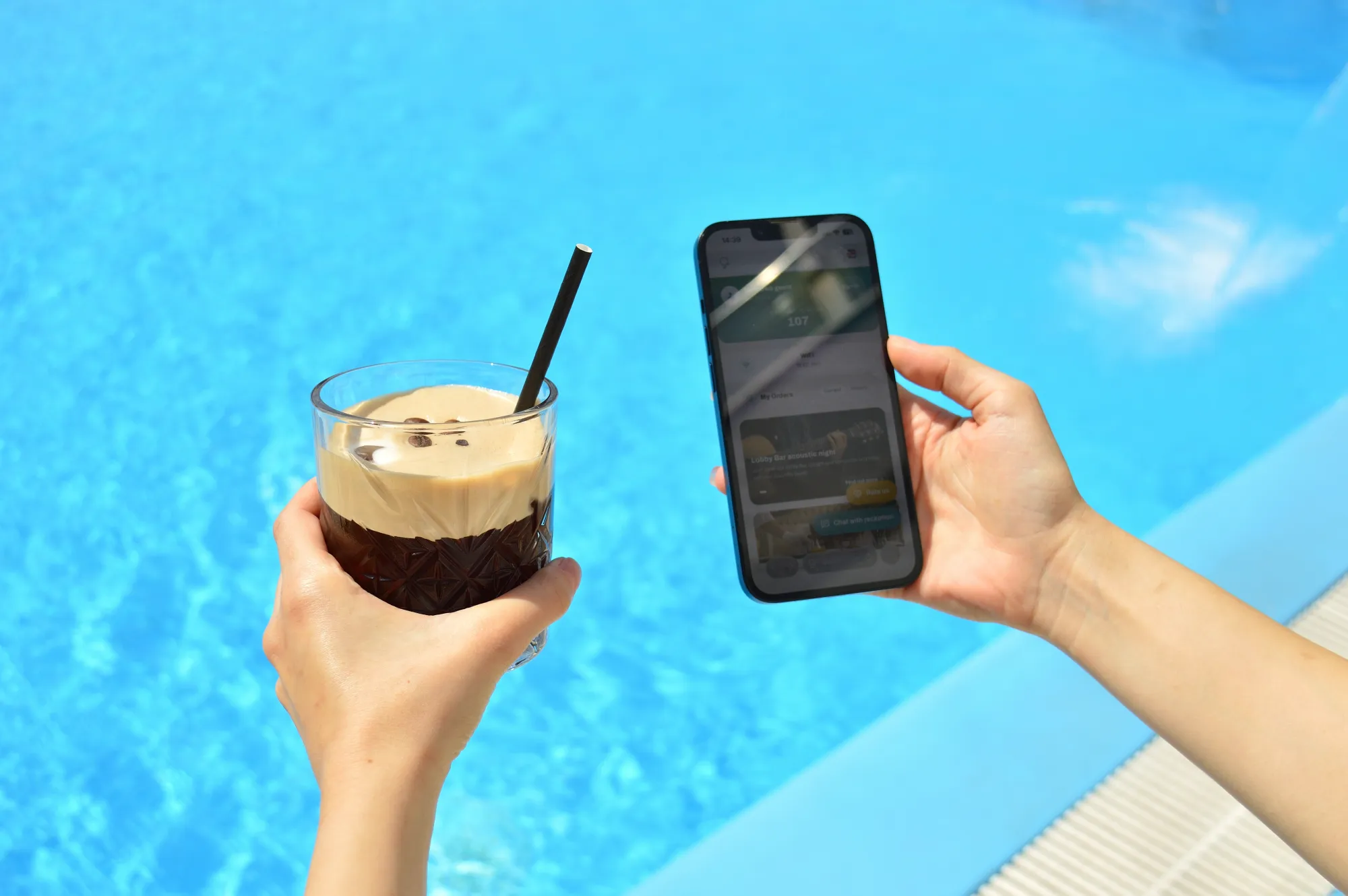
1. Put the menu where the guest is. A QR code in the room, by the pool and at the bar that opens the full wellness menu, with prices and live availability, beats any brochure. With Qreadible's Ordering & Requests, guests book a treatment or a bathhouse slot from their own phone, without downloading an app.
2. Time the offer to the stay. The best moment to sell a treatment is often the afternoon of the first full day, or a day with bad weather. Promotions & Revenue lets you send offers to in-house guests at those moments, not only before arrival.
3. Fill quiet hours on purpose. Most spas are busy from late afternoon and quiet in the morning. Price and promote the quiet hours differently.
4. Package wellness with food and drink. A bathing ritual followed by a light dinner, or a morning yoga session with breakfast, increases spend per guest and gives F&B a reason to promote the spa.
5. Measure capture, not just revenue. Track the share of in-house guests who used any wellness service each week. If revenue grows only because occupancy grew, nothing has improved.
If you run a mountain resort, the same logic applies to summer and shoulder seasons, when wellness can carry the guest's day. See Four-Season Mountain Resorts for that side of the story.
A 10-point wellness readiness check
Use this before you plan your 2027 program.
- We know our spa capture rate (share of in-house guests who use the spa) for last month.
- We know which hours of the day our treatment rooms are empty.
- At least one wellness experience can be sold without a therapist.
- Thermal, sauna or pool areas are sold in time slots, not only as open access.
- We run at least two shared wellness formats each week.
- A guest can see the full wellness menu, with prices, from their room in under 30 seconds.
- A guest can book a treatment without calling or walking to the spa.
- We send at least one wellness offer during the stay, not only before arrival.
- Wellness is packaged with F&B at least once on the menu.
- One named person is responsible for wellness revenue per occupied room.
Every unchecked box is a place where demand is reaching your resort and leaving again.
Where this leaves resorts
The wellness tourism trends for 2027 are clear: thermal bathing, therapist-free services, calm over performance, shared experiences and careful longevity programs. None of them is hard to understand. The hard part is operational: making sure each guest sees the right wellness offer, at a moment they can act on it, and can book it in a few taps.
Start with one number. Calculate your spa capture rate for last month. If you do not know it, that is the first thing to fix.
Qreadible is the revenue engine for spa and mountain resorts. It puts your spa, thermal, F&B and activity offers in front of in-house guests through a QR code in every room, lets them book from their own phone, and reports every month on what sold. See how this worked for a spa hotel on our results page, or book a demo to see what it would earn at your resort.