Key takeaways
- Treatment room utilization = treatment hours sold divided by treatment hours available. Horwath HTL puts most successful spas between 40% and 60%.
- Demand is uneven: mornings are usually quiet and late afternoons are full. Average utilization hides that pattern.
- In CBRE's US sample, resort-area hotel spas grew revenue in 2024 but saw spa profit fall 0.7%, mainly because labor costs rose faster.
- At an illustrative 8-room resort spa with an average treatment rate of EUR 110, each 5 points of utilization is worth about EUR 158,000 a year.
- The fastest gains usually come from in-house guests: offering the right treatment, during the stay, at the hours that are empty.
What spa treatment room utilization is
Spa treatment room utilization (TRU) is the percentage of available treatment room hours that are sold in a given period. It is calculated by dividing treatment hours sold by total treatment hours available across all treatment rooms. It is the spa equivalent of hotel occupancy.
The formula:
Treatment room utilization = treatment hours sold ÷ treatment hours available
Horwath HTL gives a simple example in its Spa Profitability Handbook. A spa with 10 treatment rooms that can each host up to 10 treatments a day has 100 treatment slots daily. If it sells 45 treatments a day on average, its utilization is 45%.
Two related metrics complete the picture:
| Metric | Formula | Hotel equivalent |
|---|---|---|
| Treatment room utilization (TRU) | Hours sold ÷ hours available | Occupancy |
| Average treatment rate (ATR) | Treatment revenue ÷ treatments sold | ADR |
| Revenue per available treatment room (RevPATR) | Treatment revenue ÷ available treatment room days (or hours) | RevPAR |
If your hotel team already thinks in occupancy, ADR and RevPAR, the spa can be managed with the same logic. Most spas simply never get the same daily attention.
What a good utilization rate looks like
Horwath HTL notes that most successful spas operate between 40% and 60% treatment room utilization. It also points out a pattern most spa directors will recognize: mornings are low-demand periods, and most treatments are sold from late afternoon until closing.
That pattern is the important part. A spa at 50% average utilization may be fully booked from 16:00 to 20:00 and almost empty from 09:00 to 13:00. The fix for those two periods is completely different. In the evening you need pricing power. In the morning you need demand.
Therapist utilization matters too. Horwath HTL suggests that therapist utilization above about 75% can mean guests are being turned away, and below 50% can signal overstaffing. Read the two numbers together: low room utilization with high therapist utilization means you are short of staff at peak times, not short of guests.
Resort spas: strong demand, weak profit
Demand for spa is not the issue. The International Spa Association's 2026 US Spa Industry Study puts US spa revenue at a record USD 23.5 billion in 2025, with 191 million visits and USD 123.10 average revenue per visit.
Inside hotels, the picture is less comfortable. CBRE Hotels Research analyzed 297 US hotels that operate their own spa, 222 of them in resort markets:
| CBRE spa sample, 2024 | Figure |
|---|---|
| Spa revenue per available room, resort-area hotels | USD 6,539 |
| Spa share of total revenue, resort-area hotels | 3.5% |
| Spa revenue growth, all hotels in sample | +1.4% |
| Spa labor cost growth | +3.9% |
| Spa department profit change, resort-area hotels | -0.7% |
| Share of spa revenue from massage | 60% to 75% |
The message is clear. When labor cost grows faster than revenue, the only lasting fix is to sell more of the hours you are already paying for. CBRE's own recommendation for asset managers is a disciplined focus on treatment room utilization.
Capture rate: the number behind utilization
At a resort, most spa guests are already staying with you. That makes capture rate, the share of in-house guests who use the spa, the main driver of utilization.
Horwath HTL's typical ranges:
| Property type | Typical spa capture rate |
|---|---|
| City hotel | 5% to 8% |
| Urban resort | 10% to 18% |
| Beach resort | 20% to 35% |
| Dedicated wellness retreat | 75% to 95% |
Even at the high end for a beach resort, two out of three guests leave without using the spa. Some had no interest. Many had interest but no moment, no information or no easy way to book. Those guests are the cheapest demand you will ever find: they are already on property, and you pay no commission to reach them.
Why resort spa hours stay empty
In resort spas with low utilization, the same four causes tend to come up again and again.
The empty hours are invisible. Most spa systems show bookings, not gaps. Nobody sees "treatment room 3, Tuesday, 10:00 to 13:00, empty" as lost revenue, so nobody acts on it.
The offer comes too early. Spa offers in the booking confirmation reach guests weeks before the stay, when they cannot yet know if they will have a free morning or a rainy afternoon.
Booking takes effort. If a guest has to call reception, wait, and agree a time, many will not bother. The guest who would book a 10:00 massage from the breakfast table often will not walk to the spa to ask.
Spa is not part of the hotel's daily rhythm. Front desk, F&B and housekeeping rarely mention the spa, because nothing prompts them and no target depends on it.
Run the arithmetic on your own spa
Take an illustrative resort spa with 8 treatment rooms, up to 10 treatments per room per day, open 360 days a year, and an average treatment rate of EUR 110.
- Treatment slots per year: 8 × 10 × 360 = 28,800
| Utilization | Treatments sold per year | Treatment revenue per year |
|---|---|---|
| 40% | 11,520 | EUR 1,267,200 |
| 45% | 12,960 | EUR 1,425,600 |
| 50% | 14,400 | EUR 1,584,000 |
| 55% | 15,840 | EUR 1,742,400 |
Each 5-point step in utilization is worth about EUR 158,400 in treatment revenue at this spa. Put more simply: selling 5 more treatments a day, fewer than one extra treatment per room, adds about EUR 198,000 a year, before retail.
And retail follows treatments. CBRE notes that spa retail sales can equal 15% to 30% of spa service revenue, so every extra treatment brings product sales with it.
The cost side is what makes this attractive. Your treatment rooms, your spa reception and much of your therapist schedule are already paid for. Extra treatments in empty hours carry the therapist's variable pay and products, not the full cost of the spa.
Want the spa math run on your own resort? We do it in the demo.
Six ways to fill empty spa hours
1. Price the quiet hours differently. Horwath HTL recommends yield management for spas: different prices for weekdays and weekends, high and low occupancy, and advance versus last-minute bookings. A morning rate or a "same-day" offer for the next two hours fills slots that would otherwise earn nothing.
2. Sell the morning to the right guests. Arrival-day guests waiting for their room, departure-day guests with a late flight and guests on their first full day are the natural morning audience. Target offers to them specifically.
3. Use the weather. A rainy afternoon at a mountain or beach resort is a spa sales opportunity. Have a ready-made offer you can send to every in-house guest the moment the forecast changes.
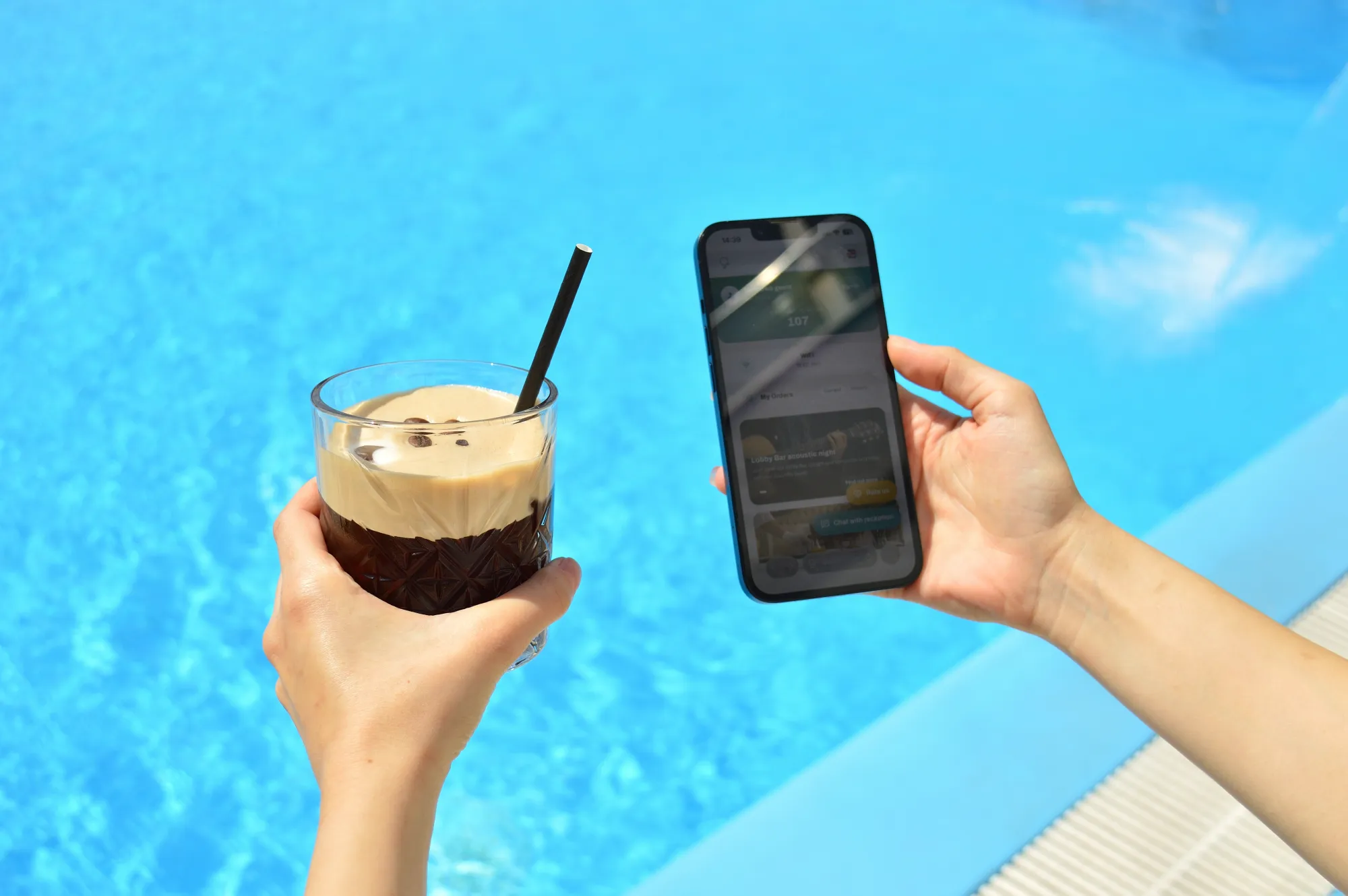
4. Put the spa menu in the room, with live availability. A QR code in each room that shows treatments, prices and open slots lets guests book in seconds from their own phone. Qreadible's Ordering & Requests does exactly this, and requests go straight to the spa team's app.
5. Pair spa with food and drink. A massage followed by lunch on the terrace, or a sauna session with a drink at the bar, increases spend per guest and gives the F&B team a reason to recommend the spa. The F&B side of this is covered in Resort F&B Capture Rate.
6. Add services that do not need a therapist. Infrared sauna, salt rooms, hydrotherapy and bathhouse sessions sell time without using the scarcest resource in the spa. We look at this trend more broadly in Wellness Tourism Trends for 2027.
A weekly spa yield review
Take 15 minutes every Monday with the spa director and revenue manager. Go through these questions:
- What was treatment room utilization last week, by day and by time block (morning, afternoon, evening)?
- What was therapist utilization in the same blocks?
- What was our spa capture rate (share of in-house guests who booked a treatment)?
- What was the average treatment rate, and did discounts push it down?
- Which three time blocks next week are emptiest right now?
- Which in-house guests will be here during those blocks, and what offer will they get?
- Is there a weather change coming that we can prepare an offer for?
- Did retail sales keep pace with treatments?
If the meeting ends with a named offer for each of the three emptiest blocks, it was worth the 15 minutes.
Where this leaves the spa
Spa treatment room utilization is the most useful number in a resort spa, because it shows the inventory you are paying for and not selling. Most successful spas sell 40% to 60% of their hours. The rest is lost every single day, quietly, because no report shows it.
Demand is not the bottleneck. The bottleneck is reaching in-house guests with the right offer, at the empty hours, with booking that takes seconds.
Start with one number. Calculate last month's utilization by time block. The morning figure will tell you where to begin.
Qreadible is the revenue engine for spa and mountain resorts. Hotel Sunce, a spa hotel in Sokobanja, Serbia, reported 15% more revenue after adopting Qreadible to put its services in front of guests during the stay. Read the case study, or book a demo to see what Qreadible would earn at your resort.